Receiving a Bronze or Silver medal in the Harvard International Review (HIR) Academic Writing Contest is a significant achievement, placing you in the global top 20% or top 10% respectively. However, many students wonder what separates these tiers from the Gold standard (top 3%). Since HIR does not release detailed itemized score breakdowns for individual essays, HIR essay feedback must be inferred from the contest’s stated priorities: rigorous research, clear argumentation, and originality.
This guide helps prospective participants and parents understand how to use past results as a diagnostic tool for improvement, focusing on substantive writing skills rather than guessing at hidden rubric points.
Understanding the Medal Thresholds
The 2026 season introduced distinct award tiers based on global ranking percentages. Knowing where you stand helps contextualize your next steps:
| Award Tier | Global Ranking | Recognition |
|---|---|---|
| Bronze | Top 20% | Certificate + Name on Website |
| Silver | Top 10% | Certificate + Name on Website |
| Gold | Top 3% | Certificate + Name on Website |
If you received a Bronze or Silver, your essay was competitive but likely lacked the depth, precision, or persuasive power required for the top 3%. The goal now is to identify specific weaknesses in your draft process.
Diagnosing Common Gaps in Research and Argument
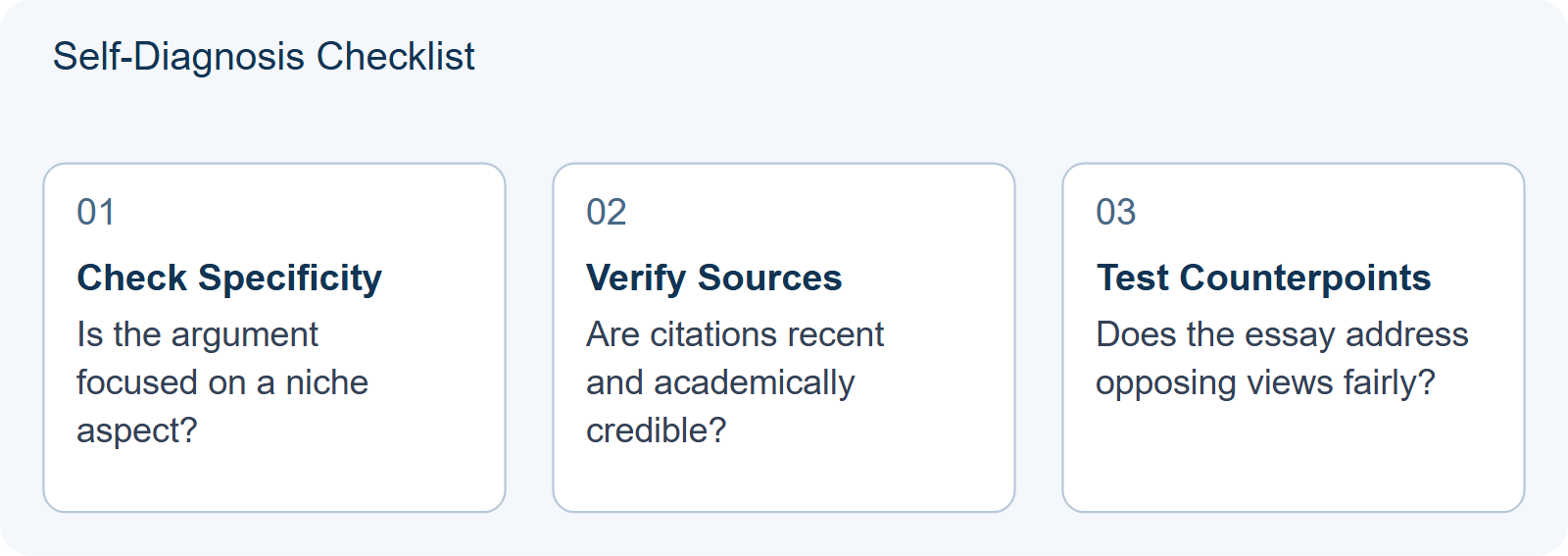
HIR judges prioritize essays that address under-discussed global themes with evidence-based arguments. A common reason for stopping short of Gold is “surface-level analysis.” To improve, review your previous submission against three critical questions:
- Did I choose a specific angle? Broad topics like “Technology is good” fail to persuade. Successful essays narrow the scope, such as analyzing how algorithmic bias affects cultural homogenization in digital eras.
- Is my evidence credible and cited? Sources must be properly attributed. Using outdated news clips or unverified blogs weakens academic rigor. Ensure every claim is backed by scholarly or reputable journalistic sources.
- Did I address counterarguments? Strong essays anticipate objections. If your paper only presents one side, it may lack the nuance expected at higher tiers.
For students struggling with structure, our resource on When Your HIR Essay Is a Fact Tour offers a three-layer test to ensure your narrative drives the argument, rather than just listing facts.
Navigating the Strict AI Policy
The 2026 season enforced stricter academic integrity measures. Essays are screened using multiple AI detection tools. High AI-generated scores lead to disqualification. This means HIR essay feedback for disqualified entries often centers on authenticity.
To ensure your work remains compliant:
- Draft Independently: Use AI only for brainstorming or grammar checks if permitted by your school’s broader guidelines, but never for generating core content.
- Prepare for Defense Day: Finalists undergo a 15-minute oral defense. Judges assess whether the student can explain their reasoning spontaneously. If you cannot articulate why you chose specific evidence, your written work may appear disconnected from your understanding.
Coaching services, such as those offered by Hanlin, focus on developing this independent voice. They do not write the essay for you but help refine your own ideas through guided questioning and structural editing.
Strategic Preparation for Future Cycles
Improving your rank requires more than just rewriting; it demands better planning. Consider these actionable steps:
- Analyze Past Themes: Review the 2026 themes (Digital Culture, Multipolar Security, Tech Power). Identify which areas you found hardest to argue. Practice outlining essays on similar sub-topics.
- Strengthen Transitions: Coherence is key. Read our guide on Transitions and Coherence to learn how to connect paragraphs logically, ensuring your thesis flows seamlessly to the conclusion.
- Refine Your Conclusion: A weak ending can undermine a strong body. See How to End an HIR Essay for techniques to land your thesis without resorting to clichéd summaries.
Remember, participation is open to grades 7-12 (Junior Division) and 9-12 (Senior Division). Regardless of nationality, all entrants must adhere to the same formatting and citation standards. Focus on building a robust research habit early in the cycle, well before the January 2 deadline for the Fall/Winter season.
HYPOTHETICAL/ILLUSTRATIVE: The ‘Counterargument Pivot’ Decision
To move from Silver to Gold, students often struggle with how deeply to engage opposing views. Consider a hypothetical student who wrote a strong essay on Digital Culture, arguing that algorithmic curation creates echo chambers. They received Silver feedback indicating their argument was clear but lacked the nuanced complexity expected at the top tier. This student faces a choice for their next draft: should they expand the existing counterargument section or restructure the entire thesis?
Let’s compare two plausible preparation choices using this specific scenario.
| Choice A: Add More Sources | Choice B: Restructure via ‘Pivot’ |
|---|---|
| Action: Keep the original thesis (Echo Chambers are Bad). Insert three new paragraphs citing studies on user agency and platform transparency. | Action: Change the thesis to acknowledge that while echo chambers exist, users actively curate them. Use evidence to show how agency mitigates harm. |
| Risk: Creates a ‘Fact Tour.’ The essay becomes a list of pros and cons without a unified narrative drive. Judges may see it as indecisive. | Risk: Requires rewriting transitions. If not done carefully, the argument may feel disjointed or contradictory. |
| Outcome: Likely remains in the Silver/Bronze range due to lack of analytical depth. | Outcome: Demonstrates higher-order thinking by synthesizing conflicting data into a new, more precise claim. |
In this illustrative example, Choice B is superior because HIR judges value originality and rigorous research over mere volume. Choice A adds breadth but not depth. It treats counterarguments as obstacles to be dismissed rather than integral parts of the analysis. Choice B uses the counterargument to refine the thesis itself. For instance, instead of saying “Algorithms isolate us,” the student argues, “While algorithms limit exposure, digital literacy allows users to break these loops.” This shift changes the essay from descriptive to analytical.
What changes the decision? The key factor is whether your current draft has a static or dynamic argument. If your thesis does not evolve based on the evidence presented, you need Choice B. If your thesis is already complex but lacks support, you might need Choice A—but only if those sources directly strengthen the dynamic argument, not just add noise.
Use this reusable self-check before finalizing your next draft: Read your introduction and conclusion side-by-side. Does the conclusion merely repeat the introduction, or does it present a refined understanding gained through the body paragraphs? If they are identical, your argument is static. To reach Gold-tier standards, ensure your conclusion reflects the nuance introduced by your counterarguments. This practice helps transform surface-level analysis into persuasive, evidence-based scholarship without relying on external coaching or guessing hidden rubric points.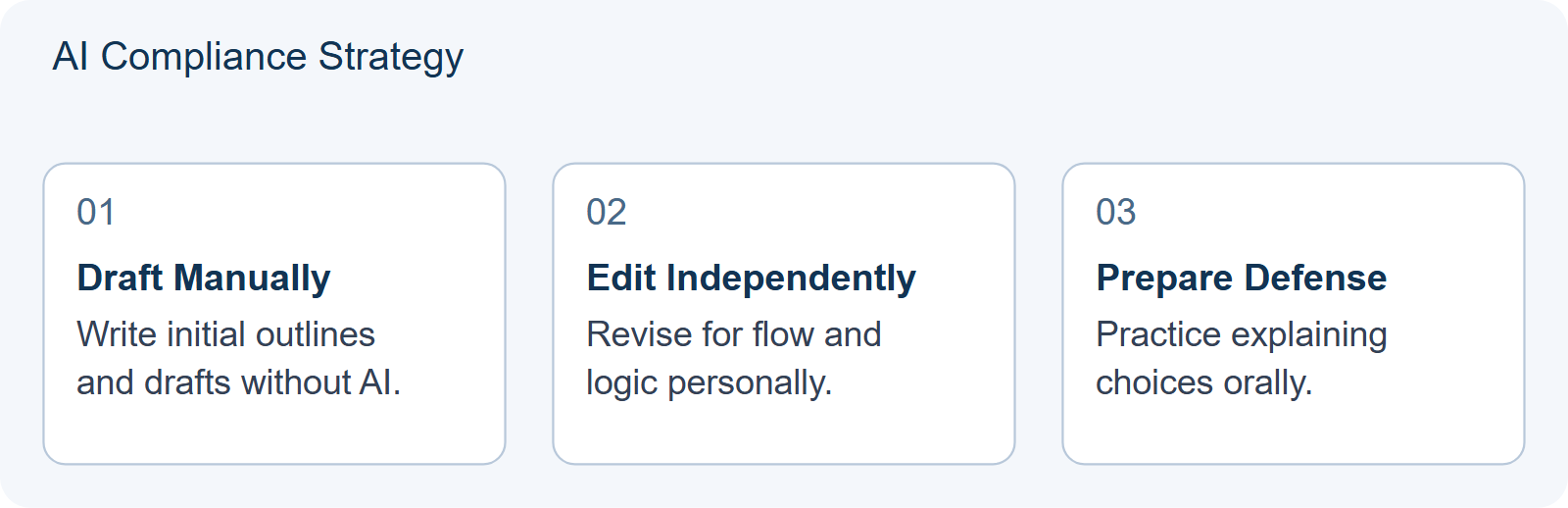
Frequently Asked Questions
Does HIR provide detailed score reports?
No, HIR does not release itemized score breakdowns. Feedback is inferred from award tiers (Bronze/Silver/Gold) and general judging priorities like clarity and research depth.
Can I use AI tools for my HIR essay?
Strictly no. The 2026 policy prohibits ChatGPT and other AI tools. Essays are screened by multiple detectors, and high AI scores result in disqualification.
What is the difference between Bronze and Gold?
Bronze represents the top 20% globally, while Gold is the top 3%. The gap usually lies in the sophistication of argumentation, quality of evidence, and originality of perspective.